

What vehicle condition information should you verify before buying?
Before you sign for a used car, a fleet vehicle, or even a freshly repaired body shell, the question is not just whether it looks clean. The real issue is what the vehicle condition information tells you about hidden damage, past repairs, wear, and future risk. That is where a handheld automotive inspection tool such as a paint thickness gauge can earn its place on the inspection table. It helps a buyer or inspector verify whether exterior panels are consistent, whether a section may have been repainted, and whether the visible finish matches the story being sold.
For sourcing managers, body shops, appraisers, and used-vehicle teams, this matters because cosmetic condition often overlaps with structural or financial condition. A glossy finish can hide repairs. A suspiciously uniform panel can be just as interesting as a visibly mismatched one. The goal is not to turn every inspection into a teardown. It is to know which facts are worth checking before money changes hands.
The practical answer: start with the condition signals that can change value
If you are asking what vehicle condition information should you verify before buying, the short list begins with the items most likely to affect safety, resale value, and downstream repair cost. Exterior body condition, paint consistency, evidence of collision repair, panel alignment, tire wear, glass condition, dashboard warning lights, underbody corrosion, and visible fluid leaks all belong near the top.
That is the buyer’s reality: some problems are obvious, some are hidden, and some are merely expensive. A used car can look well-kept while still carrying prior bodywork on one quarter panel. A commercial vehicle can run fine on a test drive and still have uneven coating or corrosion that will become a maintenance issue later. Inspection tools do not replace judgment, but they make it much harder for a seller to rely on first impressions alone.
Exterior condition is more than cosmetics
Paint and body condition are often where the first clues appear. A handheld inspection gauge placed on a painted metal panel can help identify sections that differ from surrounding areas. That does not automatically mean a car has been badly repaired. It may simply mean a panel was refinished after a minor incident or during routine bodywork. Still, it is a detail a buyer should know before moving forward.
This is especially useful in used-car buying, collision assessment, and post-repair verification. If the reading pattern changes sharply from one panel to the next, an experienced inspector will usually ask why. Was the door replaced? Was the hood repainted? Has filler been used? Even without exact model data or measurement specifications, the value of the tool is straightforward: it supports a more disciplined inspection of surface condition.
What the gauge is really helping you verify
The inspection device is not there just to measure a number. It helps confirm whether the finish is consistent from panel to panel, whether repairs are likely, and whether the vehicle has a more complex history than the seller first described. In a trade setting, that can shape pricing, reconditioning plans, or a decision to reject the vehicle altogether.
Other vehicle condition information worth checking before purchase
A proper pre-buy inspection should not stop at paint. A useful checklist covers the whole vehicle, with each area telling a different part of the story.
Body structure and panel fit
Look for uneven gaps, misaligned doors, hood or trunk resistance, overspray, seal damage, and fasteners that show removal marks. These are not definitive proof of damage, but they do suggest the vehicle deserves a closer look. Panel fit is one of those quiet signals that people overlook when the vehicle is clean and polished.
Undercarriage and corrosion
Rust, scraped components, bent brackets, and underbody leaks can point to climate exposure, poor maintenance, or prior impact. A vehicle can pass a casual walkaround while still carrying expensive corrosion under the floor or around suspension points. For fleets, this is often where the true life cycle cost hides.
Tires, brakes, and running gear
Uneven tire wear can indicate alignment issues, suspension wear, or neglected rotation. Brake condition matters as much for safety as for cost planning. A buyer evaluating a vehicle for work use should treat tires and suspension as operational assets, not afterthoughts.
Glass, lights, and trim
Windshield chips, headlamp haze, cracked lamps, missing trim, and poor seal fit all affect roadworthiness and replacement cost. These items are easy to dismiss individually, but a long list of small defects usually tells a larger story about how the vehicle was treated.
Warning lights and electronics
Dashboard lights, infotainment faults, power window issues, camera and sensor problems, and climate-control failures can be costly, especially on newer vehicles. A short test drive will not always expose intermittent faults. If the vehicle has modern driver-assistance systems, make sure they function as expected, because sensor calibration and repair bills are rarely small.
How inspection tools fit into the buying process
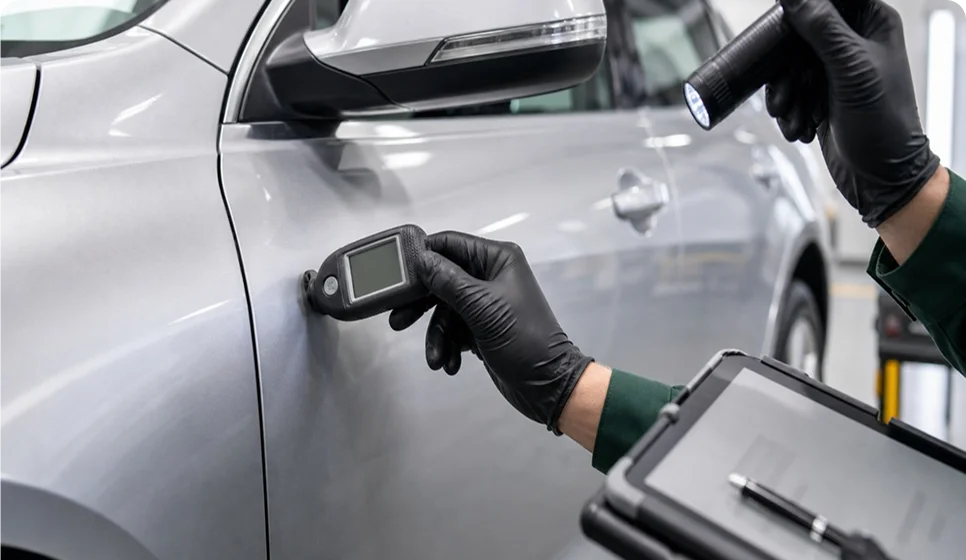
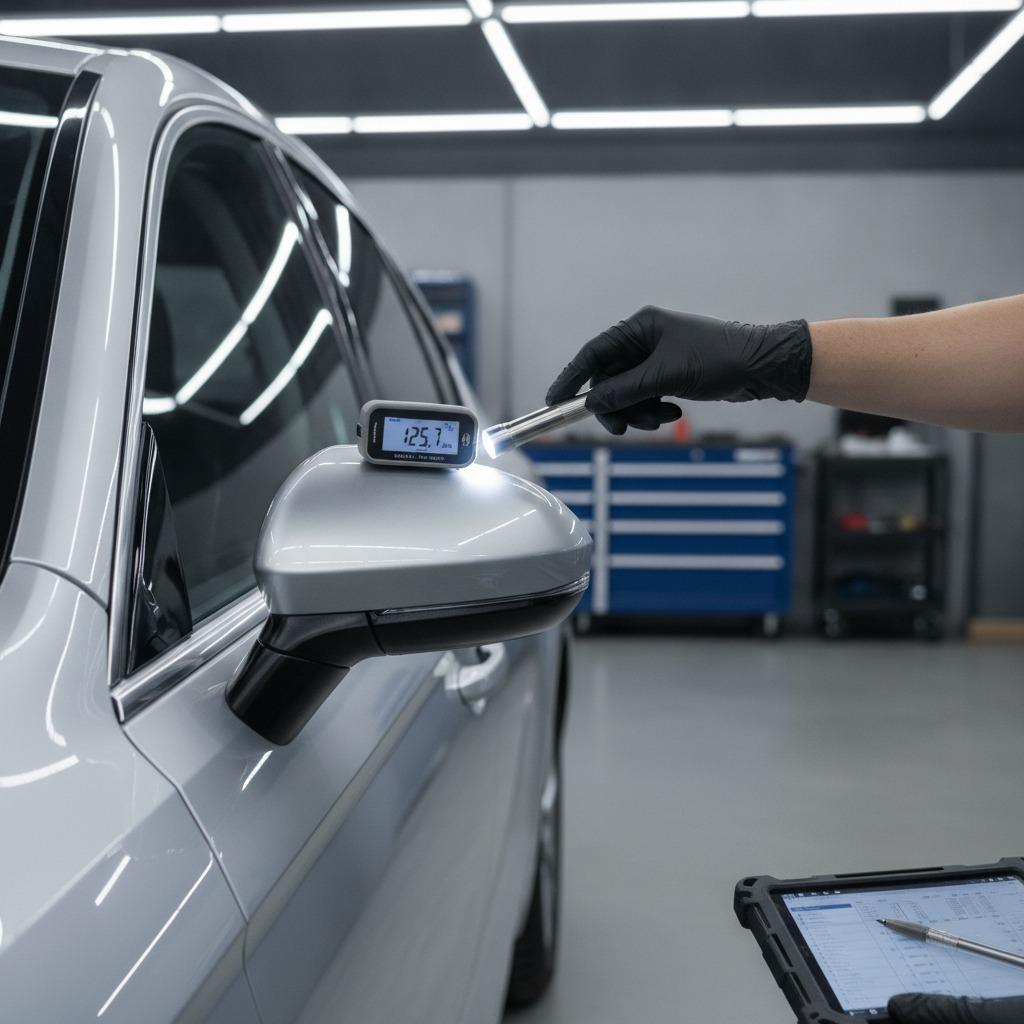
A paint thickness gauge or similar handheld automotive inspection tool belongs in the same category as a flashlight and a written checklist: simple, portable, and easy to justify when the stakes are high. In the image context, the device is being used directly on a vehicle body panel, which reflects the most common use case. A technician or buyer records results, compares panels, and decides where to probe further.
That workflow is practical because it reduces guesswork. A flashlight helps you see surface flaws. A tablet or clipboard helps you document them. The gauge helps you quantify one part of the story. Together, they create a stronger inspection record than a quick visual scan ever could.
Buyer selection criteria: what matters before you rely on the reading
When choosing an inspection device for automotive condition checks, the basic question is whether it suits the job in front of you. Portability matters because inspections happen in parking lots, auction lanes, body shops, and delivery yards. A compact handheld unit is easier to use consistently than a bulky bench instrument. A screen is useful because it lets the inspector read results on the spot. Contact-type measurement is often practical for painted exterior panels, provided the operator knows how to place the sensor head cleanly and repeatably.
Do not overstate what the tool can tell you. Without knowing the exact model, calibration method, or measurement technology, it would be careless to promise more than the image supports. A buyer should ask whether the unit is intended for paint thickness alone or broader surface evaluation, and whether it is appropriate for the coatings and substrates they inspect most often. Those are the questions that save time later.
Common mistakes buyers make
The first mistake is trusting appearance alone. A freshly detailed car can conceal a lot. The second is treating a single reading as a verdict. One suspicious panel does not prove major damage, and one normal reading does not clear the whole vehicle. Patterns matter more than isolated values.
Another common error is ignoring context. A refinished panel on an older commuter car may be acceptable if the price reflects it. The same finding on a nearly new vehicle, or on a fleet asset with body warranty implications, may be a bigger issue. The inspection result only becomes useful when it is tied to the buyer’s purpose.
Finally, some buyers skip documentation. That is a practical miss. If you are comparing multiple vehicles or reporting to a manager, write down what was checked and what looked unusual. It is tedious work, but so is arguing after the sale.
Quick-reference checklist before buying
Use a structured pass: verify exterior paint and body consistency, look for panel alignment problems, inspect underbody condition, check tire wear, test lights and electronics, review glass and trim, and confirm there are no obvious leaks or warning indicators. If a handheld inspection gauge is available, compare adjacent panels and note any readings that differ enough to warrant a closer look.
That combination gives a clearer picture than any single test. It also helps separate normal aging from real trouble.
FAQ for buyers and inspectors
Does a paint thickness reading prove an accident happened?
No. It may suggest repainting or repair, but it is not proof by itself. You need supporting signs such as panel fit, overspray, fastener marks, or repair records.
Should every vehicle be inspected the same way?
Not exactly. A retail buyer, an auction inspector, and a collision estimator may all focus on different condition risks. The checklist should match the purpose of the purchase.
Is a clean exterior enough to buy the vehicle?
Not really. Clean paint can hide bodywork, corrosion, or mechanical neglect. A good buyer looks past the shine.
A sensible next step
If you are preparing to buy a vehicle, the safest move is to pair visual inspection with simple measurement and documentation. Use a flashlight, compare panels carefully, and, when appropriate, use a handheld automotive inspection tool to verify surface consistency on painted body panels. Then decide whether the vehicle condition information supports the asking price, justifies negotiation, or raises enough concern to walk away.
That is the real value of inspection: not perfection, but clarity before commitment.